Wearable Minimal Outfit Trends: A Capsule Wardrobe Guide
Minimal Outfit Trends You’ll Actually Wear: A Practical Capsule Wardrobe Guide
Minimal style works best when it’s built for real mornings: quick outfits, repeatable formulas, and pieces that mix without effort. The most wearable “minimal” looks right now aren’t about owning less for the sake of it—they’re about choosing smarter: clean silhouettes, comfort-forward tailoring, and textures that make basics feel intentional. Below is a practical guide to what’s current, how to build a small capsule that still feels modern, and a simple (and realistic) way to use AI for outfit planning without losing personal taste.
What “wearable minimal” looks like right now
Today’s minimal outfits lean polished but not precious. Instead of loud trends, you’ll see simple shapes with one deliberate detail—think a crisp neckline, a strong shoulder, a longer hem, or a structured bag that sharpens an otherwise simple look. Color stays neutral-first (cream, black, charcoal, navy, chocolate, muted olive), while texture does the heavy lifting: ribbed knits, linen blends, poplin, denim, leather, and matte hardware.
If you like to keep your closet grounded in real-life styling (not just runway inspiration), it helps to skim both high-fashion direction and how it translates to daily wear. For broader context, Vogue Runway and The Business of Fashion are useful for spotting what’s gaining momentum—then editing those ideas down to what you’ll actually repeat.
Wearable minimal trends and how to style them
| Trend | Why it works | Easy outfit formula | Best for |
|---|---|---|---|
| Relaxed tailoring | Looks sharp without feeling stiff | Tank + oversized blazer + straight-leg trouser + sleek sneaker | Work-to-weekend |
| Longer shorts (bermuda/jorts) | Modern proportion; breezy but structured | Button-up + longer shorts + belt + loafers | Warm weather city outfits |
| Monochrome neutrals | Instantly cohesive; elongating | Cream knit + cream trouser + tan belt + gold hoops | Fast dressing |
| Quiet statement outerwear | One piece does the work | White tee + dark denim + trench/coat + shoulder bag | Transitional seasons |
| Intentional basics | Repeats well; never feels overdone | Black tee + satin skirt + minimal sandal + small bag | Day-to-night |
Capsule wardrobe, built around repeatable outfit formulas
A practical capsule doesn’t start with a number—it starts with outfits you’ll wear on your busiest days. Aim for a tight set of “building block” pieces that can create multiple looks with minimal swaps.
Core pieces to anchor your minimal capsule
- 3 base tops: a fitted tee, a tank, and a crisp button-up in neutral shades you actually like on your skin tone.
- 3 base bottoms: straight-leg denim, a tailored trouser, and a midi skirt (or longer shorts if you live in warm climates).
- Layering pieces: a blazer, a light jacket or trench, and a knit (cardigan or crewneck).
- Shoes: a clean sneaker, a loafer or ballet flat, and a minimal sandal or boot depending on season.
- Accessories: a belt, small hoops or stacking jewelry, and one structured bag.
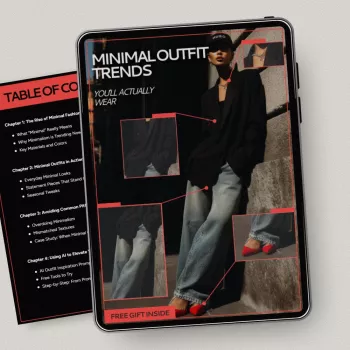
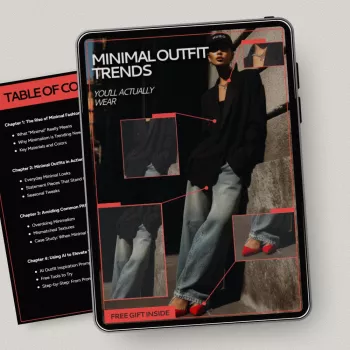
If you want a step-by-step, ready-to-use layout of outfit formulas (including minimal, everyday looks you can repeat), see Minimal Outfit Trends You’ll Actually Wear | Minimal Fashion Guide, Capsule Wardrobe eBook, Everyday Minimal Looks, AI Style Guide Digital Download.
Everyday minimal looks for common situations
The easiest way to keep minimal outfits from feeling boring is to match the formula to the situation. When the setting is clear, the outfit builds itself.
Go-to formulas that don’t require overthinking
- Office-ready: ribbed knit top + tailored trouser + loafers + structured shoulder bag.
- Errands (still put-together): boxy tee + straight denim + clean sneaker + thin belt.
- Warm-weather minimal: oversized button-up (half-tuck) + longer shorts + flat sandal + sunglasses.
- Dinner, but simple: monochrome top + midi skirt + low heel + small bag.
- Travel uniform: tank + wide-leg trouser + light jacket + sneaker; keep one accent accessory.
Longer shorts can be the most useful “bridge” item in a warm-weather capsule—more polished than short shorts, easier than jeans in heat. For outfit ideas that feel current but wearable, explore Longer Than Shorts Cooler Than Jeans — A Street Style Guide on how to style jorts street style with Confidence.
A simple AI style guide approach (without losing personal taste)
AI works best for minimal style when it supports decisions instead of replacing them. The goal is fewer mental tabs open in the morning—not a total closet overhaul.
Use constraints, then build in three steps
A practical tip: keep your outfit “library” visual (photos in an album). This aligns with the usability principle of recognition over recall—seeing options reduces decision fatigue compared to trying to remember what worked. The concept is explained clearly by Nielsen Norman Group.
Common mistakes that make minimal outfits feel flat
If you want one accessory that reliably adds structure to simple outfits, a clean shoulder bag does the job in seconds. A polished option is Calvin Klein Women’s Shoulder Bag.
A quick plan to refresh a minimal wardrobe in a weekend
Day 1: edit and build
Day 2: fill gaps and set rules
FAQ
What are the most wearable minimal outfit trends right now?
Relaxed tailoring, longer shorts, monochrome neutrals, quiet statement outerwear, and texture-driven basics are the easiest to repeat. Start with one outfit formula (like tank + blazer + trouser) and change only one element at a time (shoe or layer).
How many pieces should a minimal capsule wardrobe have?
A practical range is about 20–35 core items, then adjust based on climate, laundry frequency, and dress code. Outfit formulas matter more than the exact item count because they show what you’ll actually wear on real days.
How can AI help with daily outfit planning for minimal style?
Use AI to set constraints (your main colors, comfort needs, and dress code), then ask for variations on saved outfits rather than completely new wardrobes. It’s most useful for small swaps and weekly planning that still fits your preferences.












Leave a comment